


 mumbai metro


Know More about Mumbai Metro
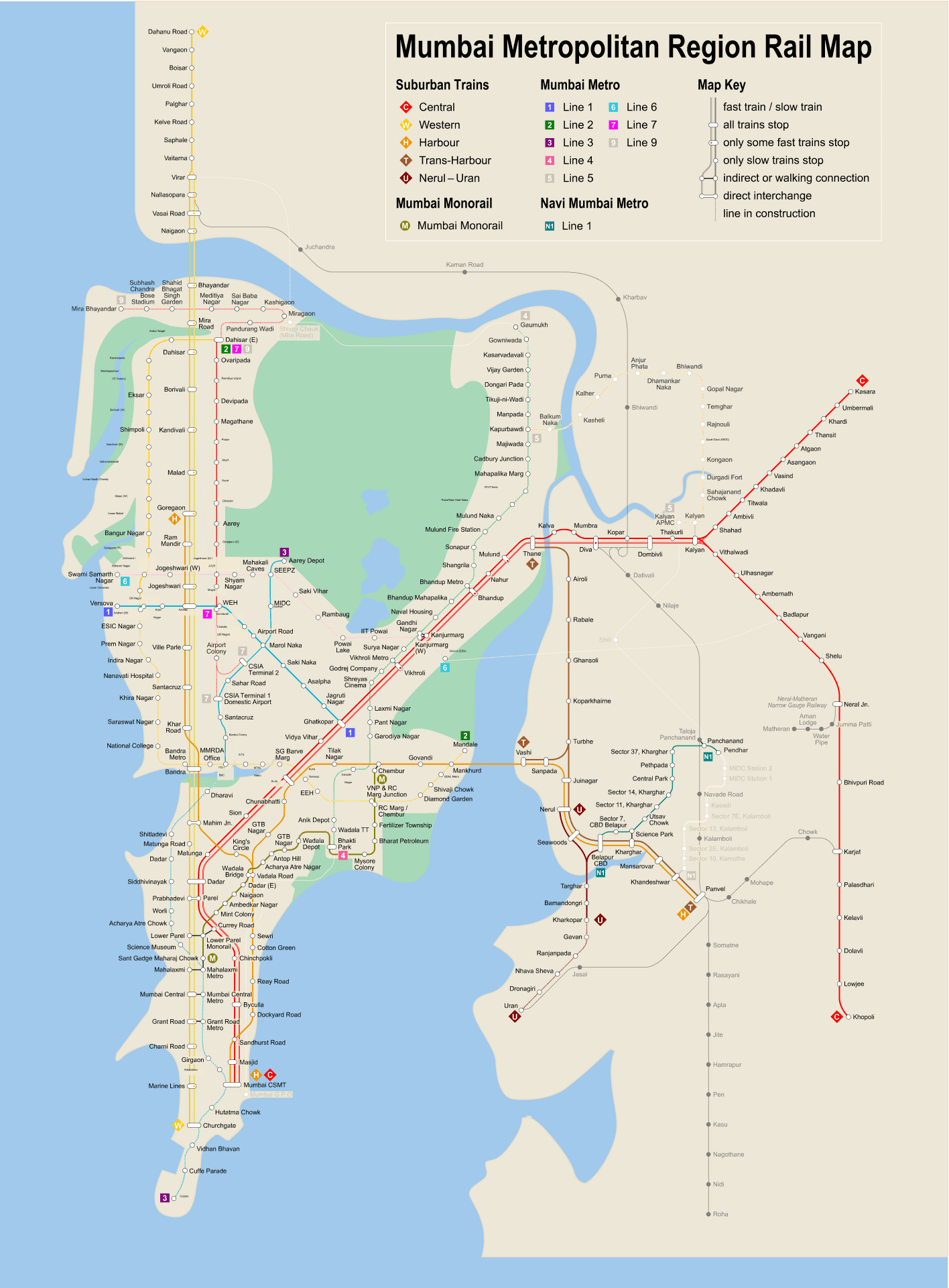
Mumbai Metro is a rapid transit system designed to revolutionize commuting in Mumbai by reducing road congestion and travel time. It operates multiple lines, including the Versova-Andheri-Ghatkopar Line (Metro Line 1) and the upcoming Colaba-Bandra-SEEPZ (Line 3), among others. Featuring air-conditioned coaches, seamless connectivity, and smart ticketing systems, the Mumbai Metro enhances urban mobility. With a focus on sustainability, it incorporates renewable energy sources and eco-friendly construction practices, providing a fast, affordable, and environmentally conscious transit solution for Mumbai's growing population.
Ending: 8:30 PM
Mumbai Metro Lines & Terminal Stations 2026
Mumbai Metro Lines with Station Map 2026
Mumbai Metro Fare Chart 2026
Mumbai Metro Fare Details
| Distance (Km) | Single Ticket | Mumbai1 Card (Mon–Sat) with 5% Discount | Mumbai1 Card (Sun & Holidays) with 10% Discount |
|---|---|---|---|
| 0 – 3 km | ₹10 | ₹9.50 | ₹9 |
| 3 – 12 km | ₹20 | ₹19 | ₹18 |
| 12 – 18 km | ₹30 | ₹28.50 | ₹27 |
| 18 – 24 km | ₹40 | ₹38 | ₹36 |
| 24 – 30 km | ₹50 | ₹47.50 | ₹45 |
| 30 – 36 km | ₹60 | ₹57 | ₹54 |
| 36 – 42 km | ₹70 | ₹66.50 | ₹63 |
| Above 42 km | ₹80 | ₹76 | ₹72 |
Mumbai Metro News
8 September, 2025
Patna Metro completed its first trial run on the elevated track from Patna Depot to Bhootnath Metro Station, covering 4.5 km through ISBT, Zero Mile, and Bhootnath stations. The fitness trial was conducted at low speed for safety.

8 September, 2025
Chennai Metro will conduct rail grinding work on the Green and Blue Lines from September 9 to October 19, 2025. Between 5:00–6:30 am, trains will run every 14 minutes instead of 7, after which normal services will resume.

9 September, 2025
Bengaluru Metro’s Yellow Line will run every 19 minutes from September 10, improving from the earlier 25-minute gap. Train services will start at 6 am (Mon–Sat) and 7 am (Sun), with last trains at 11.55 pm from RV Road and 10.42 pm from Bommasandra, as per BMRCL.

Mumbai Metro FAQs
Folding bicycles are allowed on Mumbai Metro trains, provided they fit within the luggage size and weight restrictions. Regular bicycles are not permitted onboard.
Mumbai Metro Interesting Facts
Interesting Facts about Mumbai Metro
Phased Development: The Mumbai Metro is being developed in three phases over 15 years, with full completion expected by 2025.
First Operational Line: Line 1, connecting Versova to Ghatkopar, became operational on 8 June 2014 after a successful trial in May 2013.
Underground Expansion: The 33.5-km Colaba-Bandra-SEEPZ Line (Line 3) will be Mumbai’s first underground metro line, costing ₹21,000 crore and ensuring zero carbon emissions.
Capacity and Speed: Each train accommodates approximately 2,500 passengers, with a maximum speed of 90 km/h and an average speed of 35 km/h (including stops).
Fare and Ticketing: Fares range from ₹10 to ₹40, with options like QR-code mobile tickets via Paytm and Ridlr, as well as contactless smart cards.
Eco-Friendly Operations: Line 3 will be entirely electricity-driven, promoting sustainability and reducing pollution.
First in India: Mumbai Metro features a black box system (like airplanes) for recording operational data, enhancing safety and diagnostics.
Passenger Convenience: Metro stations have clear signage, ticketing facilities, AFC gates, and divided zones for paid and unpaid access.
Operational Hours: The first train departs Versova at 05:20 hrs and the last at 23:20 hrs, with similar schedules for VIVO Ghatkopar.
Penalties: Offenses attract fines from ₹50 to ₹5,000, with imprisonment for severe violations, ensuring disciplined usage.
Future Ready: Upon completion, the metro system will have 8 high-capacity lines spanning 235 kilometers, transforming urban mobility.
Mumbai Metro Overview and History
History of Mumbai Metro
The vision for Mumbai Metro began in the early 2000s to address the city's growing traffic congestion and enhance public transport. The foundation stone for the project was laid in June 2006 by then Prime Minister Manmohan Singh.
The project aimed to establish a modern mass transit system in Mumbai, designed to supplement the overburdened suburban railway network. The first phase, comprising Metro Line 1 (Versova-Andheri-Ghatkopar), was built as an elevated corridor and completed through a Public-Private Partnership (PPP). After a successful trial run in May 2013, the line became operational on 8 June 2014.
Subsequent phases included the ambitious Line 3 (Colaba-Bandra-SEEPZ), Mumbai’s first fully underground metro corridor, launched to connect major business and residential hubs. This 33.5-kilometer line, costing ₹21,000 crore, is expected to revolutionize urban mobility while being environmentally sustainable.
With a plan to develop the metro system in three phases, spanning 235 kilometers and connecting key areas, Mumbai Metro has become a pivotal infrastructure project, reflecting the city’s modernization and commitment to eco-friendly transportation.
 Delhi Metro
 Rapid Metro
 Noida Metro
 Jaipur Metro